
(PINE02) Pine Electronics 201 (T)

- Shipping:
- Calculated at Checkout


In Stock and Ready to Ship
Frequently bought together:
Description
Canadian Pine Electronic Products Co. Ltd. (PEPCO) Model 201 tube amplifier:
Pine Electronics Model 201 Specifications
- Manufacturer: Pine Electronic Products Co. Ltd. (PEPCO) — Montreal, Quebec, Canada.
- (circa 1963–1964).
- Amplifier Type: All-Tube Guitar/Instrument Combo.
- Power Output: ~4 Watts (Single-Ended, Class A).
- Tube Complement (Typical Layout):Speaker: 1 x 8" speaker (Often factory-equipped with Jensen Special Design or RSC/Marsland 8-ohm drivers).
- Preamp: 1 x 12AX7
- Power Output: 1 x 50L6 (or 50C5 variant depending on year)
- Rectifier: 1 x 35Z5 (or 35W4)
- Power Specifications: 115 Volts AC – 60 Cycles – 0.5 Amps [Chassis Text].
- Fuse Rating: 2 Amps [Chassis Text].
Control Panel & Layout
- Inputs: 2 x Instrument Input Jacks [Chassis Visual].
- Controls: Indicators: Jewel lens pilot light (typically purple/blue) [Chassis Visual].
-
- Volume: Rotary potentiometer with integrated On/Off power switch [Chassis Visual].
- Tone: Rotary potentiometer (Sweeps between Bass and Treble voicing) [Chassis Visual].
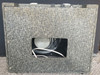
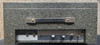
- Aesthetics: Dark grey/green mottled "wallpaper-style" woven pattern Tolex with matching patterned grille cloth and a top-mounted plastic strap carrying handle [Chassis Visual].
Important Safety Note for Vintage Owners:
Like many small consumer tube amplifiers of this specific early-1960s design, the original stock version of this model features a "transformerless" power supply topology where the circuit is fed directly from the wall line AC. This configuration is colloquially known among vintage gear collectors as a "widowmaker" circuit because a failure or reversed wall outlet polarity can accidentally put live mains voltage directly onto the guitar strings. For safe modern use, it is highly recommended to have a technician inspect it and install an isolation transformer along with a modern grounded 3-prong power cord if it hasn't been modified already.
Like many small consumer tube amplifiers of this specific early-1960s design, the original stock version of this model features a "transformerless" power supply topology where the circuit is fed directly from the wall line AC. This configuration is colloquially known among vintage gear collectors as a "widowmaker" circuit because a failure or reversed wall outlet polarity can accidentally put live mains voltage directly onto the guitar strings. For safe modern use, it is highly recommended to have a technician inspect it and install an isolation transformer along with a modern grounded 3-prong power cord if it hasn't been modified already.
Related Products


Jackson 2010 PC-1 Phil Collen RARE Chameleon Finish MINT
Jackson
$7,000.00
PLEASE CALL FOR INFORMATION AND PRICING FOR ALL RARE AND VINTAGE INSTRUMENTS
This


(GIB62) Gibson Custom Shop Les Paul R8 2013 Cherry Sunburst (W683)
Gibson
$7,149.00
This guitar does not come with the certificate.
There is minor playing wear on the back from possibly a belt, and some minor blemishes in the finish.
All original


(GIB16) 2013 Gibson Custom Shop Les Paul Standard Limited - Red Burst USED (W716)
Gibson Custom Shop
$8,999.97
We took the photos of the guitar that is specifically for sale. What you see is what you will get!
Contact us for any additional questions.
Ultra Rare only 5 ever produced. "AAAA" Flame Maple Top...